
In West Michigan, picking the right grass isn’t just about what looks good. It’s about what’s going to hold up through lake-effect winters, sandy shorelines and summer heat that can be harder on your lawn than you’d expect.
The good news: once you know what kind of grass you’re working with, making the right choices comes easier. Here’s what you need to know.
Michigan Is Cool-Season Grass Territory
Before getting into the different varieties of grass, it’s important to understand that Michigan is a cool-season grass zone. That means warm-season grasses that you see thriving in southern environments, like Bermudagrass, Zoysia and St. Augustine, can’t survive West Michigan winters. They turn tan in the fall, struggle to green back up in the spring and often don’t come back after a hard freeze.
Cool-season grasses are built for West Michigan weather. They thrive in temperatures between 60 to 75 degrees Fahrenheit, which means they grow best in spring and fall when Michigan’s weather is the most cooperative. During the heat of summer, they slow down and may go semi-dormant, but the right grass will push through.
Determining which cool-season grass is right for your yard depends on a few factors: how much sun your yard gets, what your soil looks like, how much foot traffic you’re dealing with and how much time you’re willing to put into maintenance. Here’s a breakdown of five types of grass you’ll commonly see in this region.
Kentucky Bluegrass
Kentucky Bluegrass is the most common grass used in Michigan, for good reason. It produces a dense, dark green turf that gives your lawn that classic carpet-like appearance. It spreads through underground stems called rhizomes, which means it fills in bare patches and recovers from damage on its own.
The tradeoff is maintenance. Kentucky Bluegrass requires roughly an inch to an inch and a half of water per week during growing season and performs best when in direct sunlight. It’s also more susceptible to certain lawn diseases and pests than some other varieties.
Best for: Homeowners with full-sun lawns who want a lush, show-quality yard and are willing to invest in upkeep.
Tall Fescue
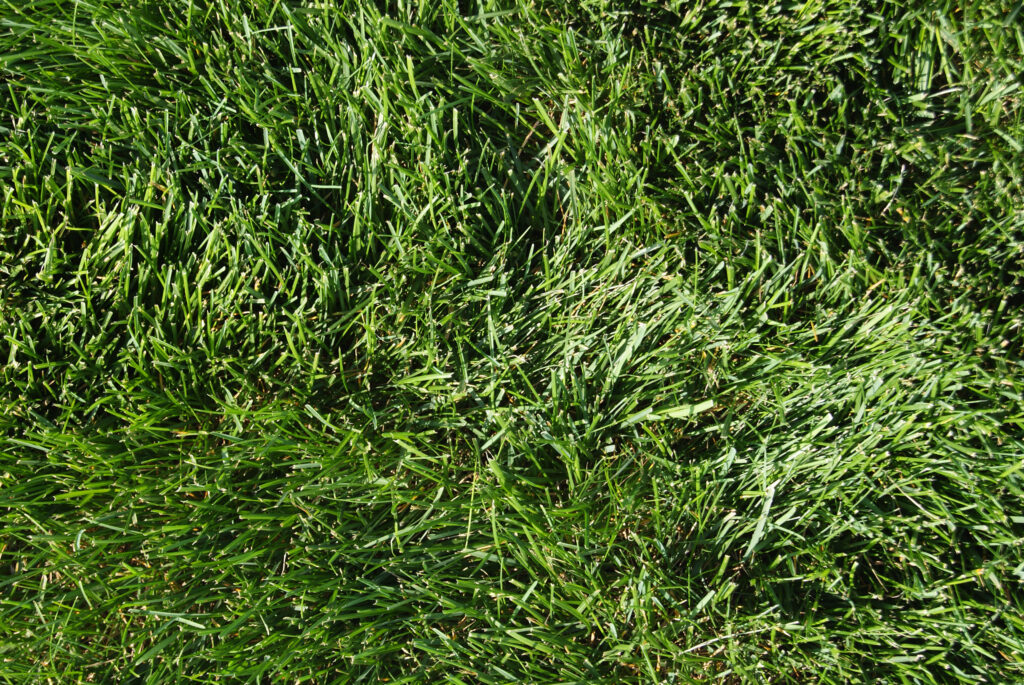
If your yard has sandy soil, which is common across much of West Michigan especially near the lakeshore, Tall Fescue is worth considering. Its deep root system allows it to anchor in loose soil, pull moisture from lower in the ground and hold up during dry stretches better than most cool-season options.
Tall Fescue also resists disease and insects, tolerates some shade and holds up under regular foot traffic, making it a strong fit for busy backyards with kids and pets. It requires less maintenance than Kentucky Bluegrass and tends to stay green through most Michigan summers without additional irrigation.
Best for: Yards with sandy or poor soil, homeowners who want a durable low-maintenance lawn and high-foot traffic areas.
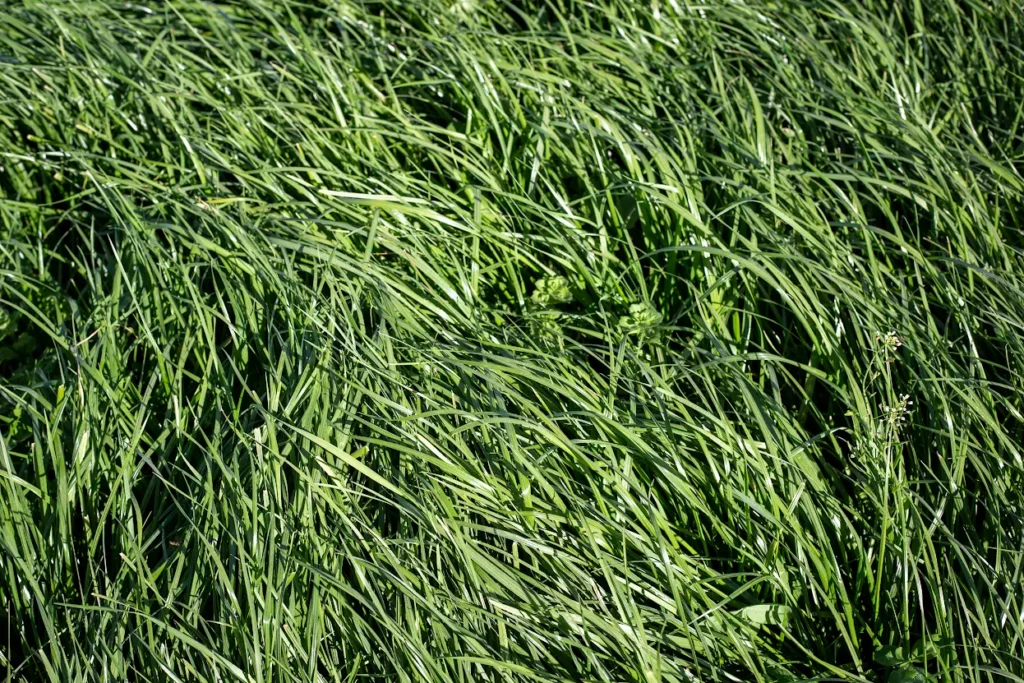
Fine Fescue
If you have a shady yard, Fine Fescue is your answer. It’s one of the few grass types that performs well in low-light conditions, making it the right call for yards with significant tree coverage or areas that don’t get much direct sunlight.
It’s also the lowest maintenance option on this list. Fine Fescue requires little fertilizer, tolerates infrequent mowing and is reasonably drought tolerant, once it’s in the ground. The catch: it doesn’t hold up well under heavy foot traffic. It works best in areas where the lawn is more decorative than functional.
In Michigan, seed mixes typically pair Fine Fescue with Kentucky Bluegrass at around 10 to 15 percent Fine Fescue. That combination improves shade tolerance in yards that do not get full sun all day.
Best for: Shaded lawns, low-maintenance yards and areas where appearance matters more than durability.
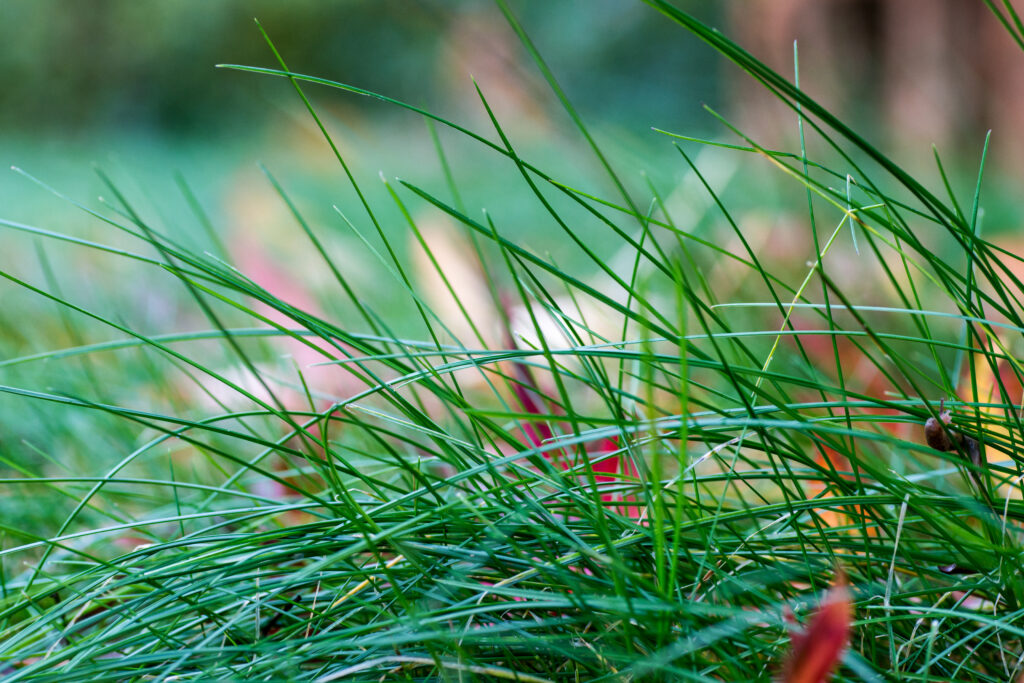
Perennial Ryegrass
Perennial Ryegrass germinates faster than anything else on this list. It can go from seed to visible growth in as little as five to ten days, which makes it a go-to for overseeding thin lawns, filling in bare patches and getting quick coverage on a newly seeded area.
It handles foot traffic well and establishes quickly across a wide range of soils. Its main limitation is its ability to handle the cold. A severe Michigan winter can injure or kill a patch of Perennial Ryegrass, which is why it works best in a mix of Kentucky Bluegrass. Ryegrass provides fast coverage up front and the slower-establishing Bluegrass takes root and delivers long-term durability.
Best for: Overseeding thin lawns, patching bare spots and blended mixes where fast establishment is the priority.
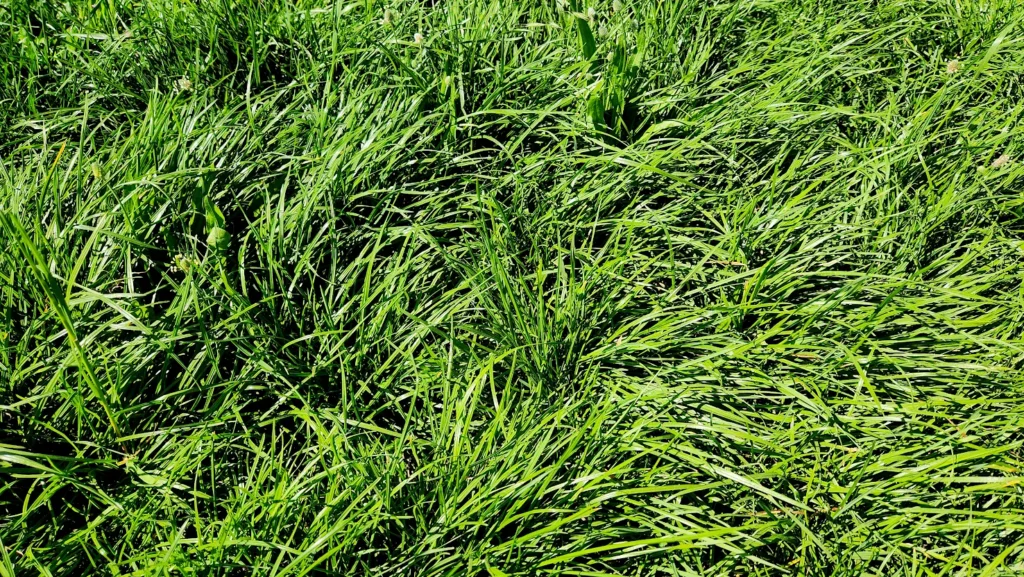
Creeping Bentgrass
Creeping Bentgrass shows up on golf courses far more than in residential yards. There’s a reason for that. It demands intense maintenance: frequent mowing at very low heights, regular fertilizing and fungicide applications just to stay healthy. That level of upkeep isn’t realistic for most homeowners.
When Bentgrass appears in a home lawn, it typically functions as a weed. We include it here so you know what you’re looking at if you come across it, and so you don’t spend time trying to maintain it like a standard lawn grass.

Why Most West Michigan Lawns Use a Mix
In practice, most lawns in this region use a blend rather than a single grass variety. Using a mix gives built-in flexibility. A combination of Kentucky Bluegrass and Fine Fescue, for example, handles both the sunny and shaded areas of a mixed-light yard. A Bluegrass and Ryegrass blend delivers fast coverage up front with long-term durability.
Blended lawns also hold up better overall, with stronger resistance to drought, pests and disease than a pure stand of any single variety. It’s one of the smarter moves you can make when seeding or overseeding in West Michigan.
How to Choose What’s Right for Your Yard
Ask yourself these questions to find your starting point:
- How much sun does your lawn get? Full sun points to Kentucky Bluegrass. Heavy shade points to Fine Fescue or a Bluegrass and Fescue mix.
- What does your soil look like? Sandy lakeshore soil is tough on most grasses. Tall Fescue handles it better than anything else.
- How much foot traffic does your lawn see? Kids, dogs and regular activity call for Tall Fescue or a durable Bluegrass mix. Low-traffic yards open up more options.
- How much maintenance do you want to take on? Kentucky Bluegrass rewards consistent care. Tall Fescue and Fine Fescue are more forgiving.
Let Bosch’s Help You Find the Right Fit
At Bosch’s Landscaping Specialists, we’ve been working with West Michigan lawns long enough to know what holds up and what doesn’t. Whether you’re starting a lawn from scratch, overseeding a thin one or trying to figure out why your grass isn’t performing the way you’d like, we can take a look and point you in the right direction.
Ready to get started? Contact us online or call us at (616) 399-6861 for a free estimate.