Most West Michigan homeowners wait too long to aerate, and by the time they get around to it, they’ve already missed the window.
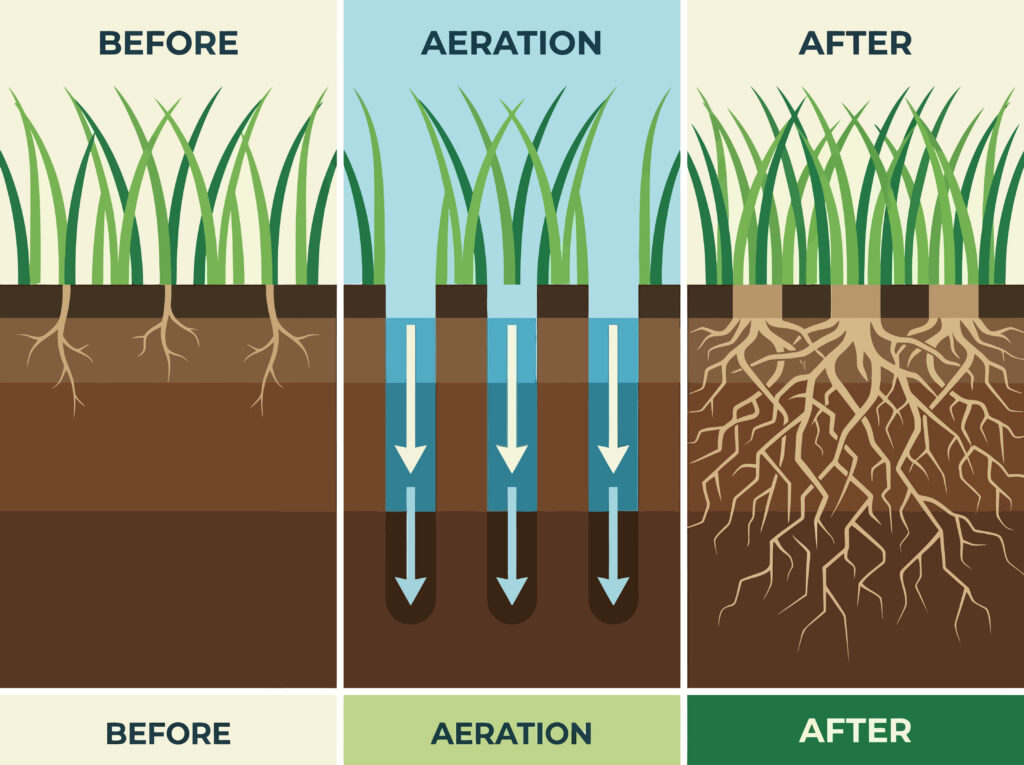
Aeration is the process of pulling small plugs of soil out of your lawn to loosen it up and give the roots room to grow. While it is not something most homeowners think about, aeration is one of those tasks that determines how your lawn performs the following spring. Think of it as opening the door so your lawn can actually breathe. Get the timing right and you set the stage for stronger roots, thicker growth and a lawn that holds up through summer.
When to Aerate Your Lawn
Aeration relieves soil compaction, giving water, air and nutrients a clear path down to the roots. But your lawn only benefits if it has time to recover afterward. That means aerating while the grass is still actively growing.
Cool-season grasses like Kentucky Bluegrass and Tall Fescue slow down significantly once nighttime temperatures start dropping into the 40s. Aerating before this happens allows for your grass to recover, and for the full benefits to be felt.
If you’re not sure what kind of grass your lawn is made of, our blog on choosing the right grass for your lawn breaks down the common varieties in the west michigan region.
The Aeration Sweet Spot
For West Michigan lawns, early fall is prime time for aeration. The soil is still warm, the grass is coming out of summer stress and there are enough weeks of growing season left for the lawn to fill in and heal.
Pair aeration with fall fertilization and overseeding. With the soil opened up, seed and nutrients get a direct path down instead of sitting on top of a compacted surface. It’s one of the best combinations in fall lawn care.

How to Aerate the Right Way
Prep your lawn by watering a day or two before. Soft soil allows for an easier and better core pull. Dry, hard-packed soil doesn’t give the aerator much to work with.
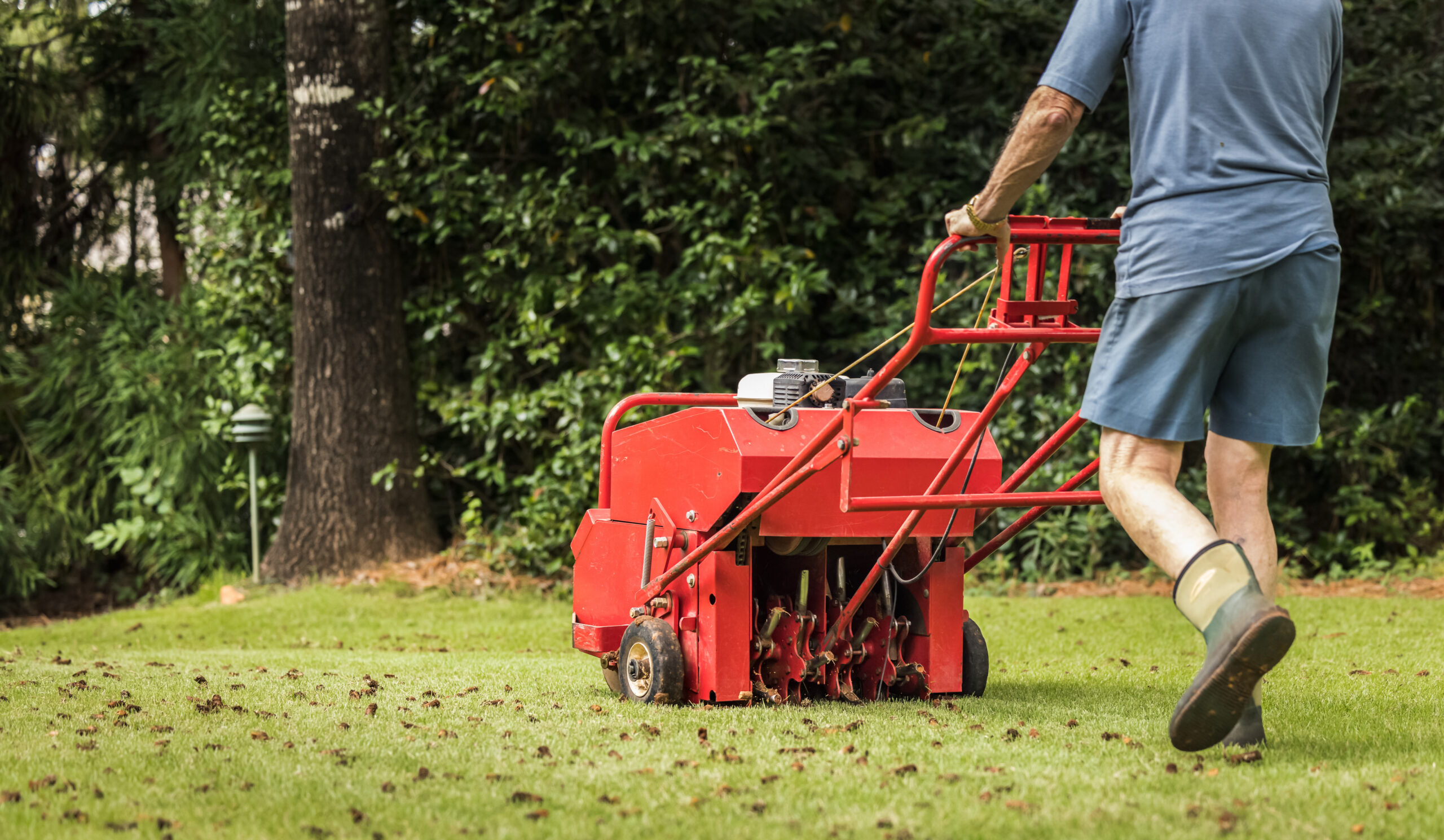
When aerating your lawn, use a core aerator, not a spike aerator. Spike aerators push soil aside, and can actually make compaction worse over time. Core aerators remove small plugs of soil out of the ground, giving your lawn room to breathe and for the roots to expand.
Make two passes on heavily compacted areas. Cross-hatching your passes covers more ground and gets you deeper relief where the lawn needs it most. No clean-up needed! After you are finished, leave the cores on the lawn. They break down within a couple of weeks and feed the soil as they do.
The Difference It Makes
A properly aerated lawn absorbs water more efficiently, leading to the development of deeper roots. When your lawn is properly aerated it is more resistant against weeds and disease the following season. It’s also the first step in a broader fall lawn care routine. Our blog on Preparing Your Lawn for Winter walks through what comes next.
An afternoon of work in early fall pays off all the way through the following summer. But, if you’d rather keep your afternoon free, leave the aeration to us! We’re happy to handle all your fall lawn care needs to help prep your lawn for winter. At Bosch’s Landscaping Specialists, we know West Michigan lawns and we know when they need attention. Call us at (616) 399-6861 or contact us online for a free estimate.